

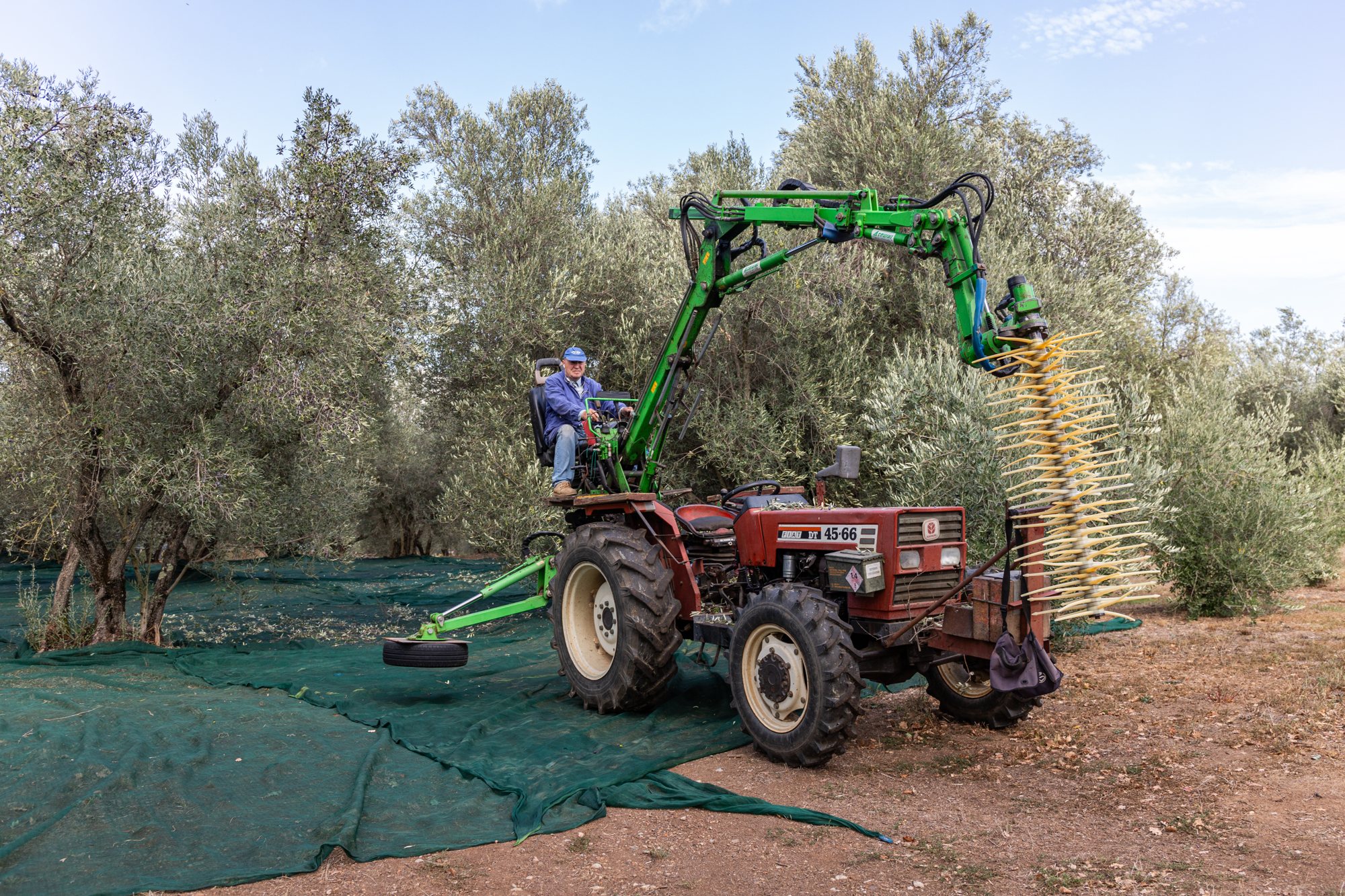
In Tuscia, October marks the start of the harvest season. In September we wrote about veraison, the colour change of the olives, and the careful observation needed to choose the right moment to pick. Now that moment is here, and with it begins a short and delicate passage: the hours between an olive leaving the tree and the oil leaving the mill.
From the outside, this phase is barely visible. Yet an olive picked at exactly the right time can lose much of its quality if it waits too long, is piled up badly or warms up before it reaches the mill.
Why a picked olive cannot wait
While it is on the tree, the olive is a living, protected fruit. Once picked, it starts to change straight away. Enzymes in the flesh set off processes that, over time, raise acidity and use up the compounds that give oil its aroma, bitterness and pungency. If the skin is bruised or broken, oxygen gets in more easily and the decline speeds up.
The best-known risk is fermentation. Olives heaped in deep layers, closed in sacks or left somewhere warm tend to heat up and ferment. This is where defects come from that a taster recognises at once, such as fustiness, and that no later processing can put right. That is why every good mill follows a simple rule: mill as soon as possible after picking.
How olives should be moved and stored
Between the grove and the mill, three things matter most: air, temperature and gentle handling. Olives travel best in shallow, ventilated crates that let air circulate and do not crush the bottom layers. They should be kept cool and in the shade, out of direct sun, and handled as little as possible: every knock is a small wound where oxidation begins.
The way olives are picked matters too. A harvest that damages the fruit as little as possible, with nets spread under the tree and no olives left on the ground, brings healthier fruit to the mill. Olives that have been lying on the ground for days have already started to deteriorate and should not be mixed with freshly picked ones.
What happens when the olives reach the mill
At the mill, the work follows a precise sequence. First the olives are separated from leaves and twigs and washed to remove soil and impurities. Then they are crushed, turning flesh and stone into a paste. The paste goes on to malaxation, a slow mixing that helps the tiny droplets of oil come together, and finally to separation, which divides the oil from the vegetation water and the solids.
Temperature is decisive at this stage. A warmer paste yields more oil, but at the expense of aroma and the more fragile compounds. This is where the term “cold extracted” comes in: European rules allow it only when processing takes place below 27 °C. It is a limit that protects exactly what was so carefully preserved in the hours before.
New oil, at the end of the journey
The oil that comes out of the mill during the harvest weeks is new oil: green, often cloudy, with an intense fruitiness and a clear bitterness and pungency. These are the signs of olives milled fresh, and the result of every choice made along the way: when to pick, how carefully the fruit is carried, how quickly it reaches the mill.
Here we wanted to tell the story of what comes before the bottle: a stretch of the journey that should be as short as possible, that is almost invisible from the outside, and that decides much of what you will find in your glass.
At Frantoio Cesare Battisti in Vetralla, the harvest is when a whole year of work arrives at the mill. We will share it on our social channels as it unfolds. In the meantime, you can discover our extra virgin olive oil in our shop or come and visit us in Vetralla.